Last updated: September 2026
The same classical work is often sold by five or six publishers, at very different prices. One edition may be a critical text built from manuscripts. Another may be a low-cost reprint of an earlier print with a new cover.
This guide covers the publishers you are most likely to meet when buying Arabic books in Tafsir, Hadith, Fiqh, 'Aqidah, history and the wider Islamic sciences. For each one it says what the house is known for and which editions it is known by, so you can compare prints with some idea of what to expect.
One principle runs through the whole guide: a publisher's reputation is a starting point, not a verdict. Judge the edition, and above all the editor.
Volume counts below follow publishers' and library catalogues. Some count index volumes and some do not, so check the listing for the printing you are buying.
Quick Reference: Which Publisher for Which Subject?
| Publisher | Base | Best known for |
|---|---|---|
| Mu'assasat al-Risalah | Beirut | Shu'ayb al-Arna'ut's team editions: Musnad Ahmad, Siyar A'lam al-Nubala', Zad al-Ma'ad; Bashar 'Awwad Ma'ruf's Tahdhib al-Kamal |
| Dar al-Risalah al-'Alamiyyah | Damascus / Beirut | Arna'ut's Sunan Abi Dawud and Sunan Ibn Majah |
| Dar al-Gharb al-Islami | Beirut | Bashar 'Awwad Ma'ruf's Tarikh Baghdad, Tarikh al-Islam, Jami' al-Tirmidhi; major Maliki works |
| Dar Hajr | Cairo | 'Abd Allah al-Turki's al-Tabari, al-Bidaya wa'l-Nihaya and al-Durr al-Manthur |
| Dar al-Minhaj | Jeddah | Shafi'i Fiqh: Nihayat al-Matlab, al-Bayan |
| Dar 'Alam al-Kutub | Riyadh | Turki and al-Hulw's al-Mughni; reprints of Turki editions; large reference sets |
| Dar Ibn al-Jawzi | Dammam | Salafi-oriented catalogue; Ibn al-'Uthaymin, Ibn al-Qayyim, Ibn Taymiyyah |
| Dar Ibn Hazm | Beirut | Very wide catalogue across Fiqh, Hadith, Tafsir, Seerah and history |
| Dar al-Kutub al-'Ilmiyyah | Beirut | The widest catalogue; quality varies by title |
| Dar Ibn Kathir | Damascus / Beirut | Team edition of al-Bidaya wa'l-Nihaya (Arna'ut and Ma'ruf reviewing) |
| Dar al-Basha'ir al-Islamiyyah | Beirut | 'Abd al-Fattah Abu Ghudda's works and editions |
| Dar al-Diya' | Kuwait | Shafi'i Fiqh and Usul |
| Dar al-Ta'sil | Cairo | Hadith and source-text editions |
| Dar al-Nafa'is | Amman | Works of 'Umar and Muhammad Sulayman al-Ashqar; 'Aqidah and Fiqh |
| Dar al-Hadith | Cairo | Hadith, including Musnad Ahmad (Ahmad Shakir) |
| King Fahd Complex | Madinah | The standard printing of Majmu' al-Fatawa |
Why Does the Publisher Matter?
A high price often reflects real work: locating manuscripts, commissioning a specialist, checking references, building indexes, and printing a multi-volume set well. A low price often means the publisher reset or photographed an earlier print.
The publisher tells you what to expect. The muhaqqiq (editor) tells you what you are actually getting.
Publisher or Muhaqqiq: Which Matters More?
For classical texts, the muhaqqiq often matters more. A serious critical edition compares manuscripts, records variant readings, verifies Qur'anic verses and Hadith, identifies people and places, and provides usable indexes.
Two examples show how much the choice of edition changes what you own.
Al-Tabari's Jami' al-Bayan.
- Mahmud and Ahmad Shakir (Dar al-Ma'arif, Cairo, 16 volumes, 1954-68): respected for its Hadith verification, but unfinished. The editor died and the work stops at Surah Ibrahim, verse 27.
- 'Abd Allah al-Turki (Dar Hajr, Cairo, first edition 2001, 26 volumes including two of indexes): the complete text, often regarded as the most careful full edition. It has been reprinted by Dar Hajr and by Dar 'Alam al-Kutub in Riyadh, among others.
- Bashar 'Awwad Ma'ruf and 'Isam al-Harastani (Mu'assasat al-Risalah, Beirut, 7 volumes, 1994): this is not a full edition. It is a tahdhib, an edited abridgement of al-Tabari's work.
- Dar al-Kutub al-'Ilmiyyah also issued a 12-volume edition in 1997.
Al-Qurtubi's al-Jami' li-Ahkam al-Qur'an.
- Dar al-Kutub al-Misriyyah (Cairo, 20 volumes): the older standard edition, mid-twentieth century.
- Hisham Samir al-Bukhari (Dar 'Alam al-Kutub, Riyadh, 2003, 20 volumes).
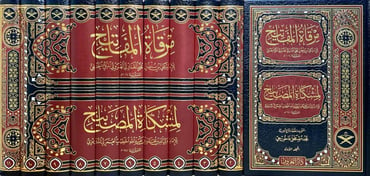
- 'Abd Allah al-Turki (Mu'assasat al-Risalah, 24 volumes): the newest of the three, with a full critical apparatus. It was first published in 2006 (1427 AH). The 2017 issue (marked "first edition, 1438 AH / 2017") keeps the 2006 copyright notice but carries the logo "Mu'assasat al-Risalah Nashirun" (Resalah Publishers) with Damascus and Beirut addresses on its copyright page. Each volume's title page names the editors for that volume, for instance Muhammad Ridwan 'Arqsusi for volume 1. Check the year and imprint on the set you are buying.
Ask two questions before buying: who published it, and who edited it?
The Major Publishers
Mu'assasat al-Risalah | مؤسسة الرسالة (Beirut)
Risalah is closely tied to Shu'ayb al-Arna'ut and his team of researchers. Its best-known editions include:
- Musnad of Imam Ahmad: 50 volumes, first edition 1416 AH / 1995-96, with a team of editors under Arna'ut's supervision.
- Siyar A'lam al-Nubala' of al-Dhahabi: 25 volumes including two of indexes, prepared by a team under Arna'ut, with Bashar 'Awwad Ma'ruf among the editors.
- Zad al-Ma'ad of Ibn al-Qayyim, edited by Shu'ayb and 'Abd al-Qadir al-Arna'ut. Risalah first issued it in 1979 and reissued a revised, re-typeset edition in 1997 (six volumes, five of text and one of indexes) with different page numbering. The two issues are not interchangeable if you are citing pages.
- Tahdhib al-Kamal of al-Mizzi, edited by Bashar 'Awwad Ma'ruf: 35 volumes, later reissued in a revised 8-volume edition (1998).
- al-Jami' li-Ahkam al-Qur'an of al-Qurtubi, edited by 'Abd Allah al-Turki (24 volumes; first published 2006, reissued 2017).
- Sunan al-Daraqutni: Arna'ut and team, 5 volumes, 2004.
- Sharh al-'Aqida al-Tahawiyyah of Ibn Abi al-'Izz, edited by al-Turki and Arna'ut (2 volumes).
Do not confuse it with Dar al-Risalah al-'Alamiyyah (headquartered in Damascus, with a Beirut branch), a related but separate imprint. It published the Arna'ut team's Sunan Abi Dawud (with Muhammad Kamil Qarah Balli, first edition 2009, 7 volumes) and Sunan Ibn Majah (Arna'ut, 'Adil Murshid, Qarah Balli and 'Abd al-Latif Harz Allah, 2009, 5 volumes). Buyers mix the two names up constantly, so check the spine. The Risalah name also appears in other forms: the 2017 issue of al-Turki's al-Qurtubi, for example, carries the logo "Mu'assasat al-Risalah Nashirun" (Resalah Publishers). When a listing says only "Risalah", check which form the title page and copyright page actually print.
Dar al-Gharb al-Islami | دار الغرب الإسلامي (Beirut)
Dar al-Gharb is the imprint most associated with Bashar 'Awwad Ma'ruf:
- Tarikh Baghdad of al-Khatib al-Baghdadi (17 volumes, 2001).
- Tarikh al-Islam of al-Dhahabi (first edition 2003, 17 volumes including indexes).
- Jami' al-Tirmidhi (al-Jami' al-Kabir, 6 volumes, 1996).
- Muwatta' Malik, in the recension of Yahya al-Laythi (2 volumes, 1996).
It is also the main home of scholarship on Maliki Fiqh and the Islamic West, including al-Qarafi's al-Dhakhira (Muhammad Hajji, Sa'id A'rab and Muhammad Bu Khubza, 1994, 14 volumes including an index volume) and Ibn Rushd al-Jadd's al-Bayan wa'l-Tahsil (Muhammad Hajji and colleagues, second edition 1988, 20 volumes including two of indexes). A cheaper 10-part Dar al-Kutub al-'Ilmiyyah edition of al-Dhakhira also exists, so compare the two carefully before buying.
Dar Hajr | دار هجر (Cairo)
Dar Hajr is closely tied to the editions of 'Abd Allah al-Turki, prepared with its research centre:
- Jami' al-Bayan of al-Tabari (first edition 2001, 26 volumes).
- al-Bidaya wa'l-Nihaya of Ibn Kathir (first edition 1997-2000, 21 volumes including an index volume). In his introduction al-Turki explains that he chose not to include additions found in some manuscripts, so this edition is shorter than some earlier prints.
- al-Durr al-Manthur of al-Suyuti (first edition 2003, 17 volumes, of which two are indexes).
Many of these sets have since been reprinted, photographically, by Dar 'Alam al-Kutub in Riyadh, so check the title page for publisher and edition number.
Dar Ibn Kathir | دار ابن كثير (Damascus / Beirut)
Dar Ibn Kathir published a separate, team-prepared edition of al-Bidaya wa'l-Nihaya, with the text reviewed by 'Abd al-Qadir al-Arna'ut and Bashar 'Awwad Ma'ruf (20 parts including indexes; a third edition appeared in 2013). If you are choosing between it and al-Turki's Dar Hajr edition, compare the two editors' introductions.
Dar al-Minhaj | دار المنهاج (Jeddah)
Dar al-Minhaj is the reference point for Shafi'i students. Its flagship is Nihayat al-Matlab of Imam al-Haramayn al-Juwayni, edited by 'Abd al-'Azim al-Dib (first edition 2007, 20 or 21 volumes depending on how the index is counted). Al-Dib reportedly worked from about twenty manuscripts. It also published al-'Imrani's al-Bayan (edited by Qasim Muhammad al-Nuri, first edition 2000, 13 volumes). Its typesetting is clean and readable.
Dar 'Alam al-Kutub | دار عالم الكتب (Riyadh)
'Alam al-Kutub is known for large multi-volume sets. These include Ibn Qudamah's al-Mughni (edited by 'Abd Allah al-Turki and 'Abd al-Fattah al-Hulw, third edition 1997, 15 volumes including indexes) and an edition of al-Qurtubi's al-Jami' li-Ahkam al-Qur'an edited by Hisham Samir al-Bukhari (2003). It has also reprinted several of al-Turki's Dar Hajr editions. For sets this large, the editor, indexes and volume arrangement matter more than the imprint.
Dar Ibn al-Jawzi | دار ابن الجوزي (Dammam)
A Saudi house founded in Dammam in the mid-1980s. Its catalogue covers Qur'anic sciences, Hadith, Fiqh, 'Aqidah and Islamic ethics, with a strong presence of contemporary Saudi scholarship, including the works of Ibn al-'Uthaymin, and editions of Ibn al-Qayyim and Ibn Taymiyyah. Note that Dar Ibn al-Jawzi in Cairo is a separate publisher.
Dar Ibn Hazm | دار ابن حزم (Beirut)
Founded in Beirut in 1988, Dar Ibn Hazm has published thousands of titles in Fiqh, Hadith, Tafsir, Seerah and history. Its catalogue is so wide that quality varies from title to title. Note that Dar Ibn Hazm in Riyadh is a separate house, so check the city on the title page.
Dar al-Kutub al-'Ilmiyyah | دار الكتب العلمية (Beirut)
Founded in Beirut in 1971, this is probably the publisher you will meet most often, and usually at the lowest price. It has published well over ten thousand titles and made many works available that no other house has printed.
Be aware, though: students and teachers frequently advise caution with its editions. Some titles are photographic reprints of older prints, such as its reprint of the Halabi edition of Nihayat al-Muhtaj. Others carry little critical apparatus. Its older printings are often regarded more favourably than later ones. For a serious study text, check the named editor and read the introduction. For an occasional-use reference, or where no other edition exists, an 'Ilmiyyah print can be perfectly adequate.
Dar al-Basha'ir al-Islamiyyah | دار البشائر الإسلامية (Beirut)
Best known for the works and editions of 'Abd al-Fattah Abu Ghudda, published with Maktab al-Matbu'at al-Islamiyyah of Aleppo, and for other Hadith and heritage texts, including al-Juwayni's al-Talkhis (edited by 'Abd Allah al-Naybali).
Dar al-Diya' | دار الضياء (Kuwait)
A Kuwaiti publisher with a strong Shafi'i and Usul list, including al-Adhra'i's Fatawa, al-Nawawi's al-Muntakhab and editions related to Bughyat al-Mustarshidin. Some titles are co-published with Egyptian and Moroccan houses.
Dar al-Ta'sil | دار التأصيل (Cairo)
A Cairo house whose research centre prepares Hadith and source-text editions, including a 2015 edition of Sunan Abi Dawud (edited by 'Adil Muhammad and 'Imad 'Abbas) and al-'Uqayli's al-Du'afa'.
Dar al-Nafa'is | دار النفائس (Amman)
A Jordanian house best known for the works of 'Umar Sulayman al-Ashqar (including his 'Aqidah series and introductions to Shari'ah and Fiqh) and of Muhammad Sulayman al-Ashqar, mainly in Fiqh and Usul.
Dar al-Hadith | دار الحديث (Cairo)
Despite the name, it publishes across Hadith, Fiqh and Tafsir. Its editions include a Musnad Ahmad credited to Ahmad Shakir and Hamza al-Zayn, and Mughni al-Muhtaj. Judge each title individually.
King Fahd Complex for the Printing of the Holy Qur'an | مجمع الملك فهد (Madinah)
Its printing of Ibn Taymiyyah's Majmu' al-Fatawa, compiled by 'Abd al-Rahman b. Qasim and his son Muhammad, runs to 37 volumes including indexes. It is widely treated as the standard reference edition. A 20-volume edition by Anwar al-Baz and 'Amir al-Jazzar (Dar al-Wafa' and Dar Ibn Hazm) is also available.
Other Names Worth Knowing
Depending on the subject, you will also meet Dar al-Qalam, Dar al-Lubab, Dar al-Fath, Dar al-Rayahin, Dar Taybah and Dar al-Fikr, among others. Some specialise in particular subjects, while others have very broad catalogues. This guide is not a ranking of every Arabic publisher. It is a map of the names you will meet first.
Key Terms
- Tahqiq: establishing a text by comparing manuscripts and correcting errors.
- Muhaqqiq: the editor who does this work.
- Ta'liq: the editor's footnotes and commentary.
- Takhrij: tracing Hadith and quotations to their sources and grading them.
- Tab'ah: a printing or edition. Later printings of the same edition can differ in quality and page numbering.
- Tahdhib: an edited or abridged version of a work, which is not the same as a full edition.
- Critical edition vs. reprint: a critical edition is built from manuscripts and documented. A reprint reproduces an earlier printed text, sometimes labelled "muhaqqaq" without real editorial work.
Warning Signs
- The cover claims "tahqiq" but no editor is named.
- The introduction does not say which manuscripts were used.
- The pages look photocopied from an earlier print.
- No edition number or year is given.
- Verses and Hadith are unreferenced.
- The title suggests a complete work, but the text is an abridgement (tahdhib or mukhtasar).
What to Check Before Buying
- The muhaqqiq: is the editor known in this field?
- Manuscripts used: does the introduction say?
- Referencing: verses, Hadith and quotations.
- Indexes: essential for large works.
- Typesetting: clear text and sensible footnotes if you will use it daily.
- Number of volumes: compact convenience versus fuller editorial material.
- Edition and printing: later printings may be reset and paginated differently.
- Your purpose: research needs and weekly-lesson needs are not the same.
Does a More Expensive Edition Mean a Better One?
Not necessarily. Price reflects paper, binding, volume count, printing location, shipping and editorial work. A costly set may contain superior research, but price alone proves nothing. A modest edition may suit regular study perfectly well. The better question is: which edition suits how I will use this book?
How Al Kunuz Selects Arabic Books
We do not try to stock every print of every title. Where several editions exist, we look at the muhaqqiq, the print quality, readability, availability and suitability for students. Our Arabic collection covers Tafsir, Hadith, Fiqh, 'Aqidah, Arabic language, Tazkiyah, Seerah and other Islamic sciences.
Already know the book you want? See our guide to The Best Editions of Arabic Books or browse the Arabic Islamic Books collection.
Frequently Asked Questions
Is Dar al-Kutub al-'Ilmiyyah reliable?
It varies by title. It is a very broad catalogue with many useful, affordable editions and some works available nowhere else, but many titles lack the critical apparatus of editions from Risalah, Dar Hajr or Dar al-Gharb. Check the named editor for each book.
What is a critical edition?
An edition built by comparing manuscripts, recording variants, verifying references and adding indexes, as opposed to a reprint of an earlier print.
Which publisher is best for Hadith?
There is no single answer. Risalah and Dar al-Risalah al-'Alamiyyah (the Arna'ut editions) and Dar al-Gharb (Bashar 'Awwad Ma'ruf) are major names, but the choice depends on the work and the editor.
Which publisher is best for Shafi'i Fiqh?
Dar al-Minhaj is a leading name for the school's major texts, and Dar al-Diya' is worth knowing for smaller Shafi'i and Usul works.
Is a "tahdhib" the full book?
No. It is an edited or abridged version. Always check whether the title page says tahdhib or mukhtasar.
Does a famous publisher guarantee a good edition?
No. Judge each edition and its editor.
A Final Principle
Learn the names of respected publishers, but do not become attached to them. A great publisher can be surpassed on a particular work by another house, and a lesser-known publisher may hold the best or only available edition of a text.
Weigh them together: the book + the edition + the muhaqqiq + the manuscripts + the publisher + your purpose.