
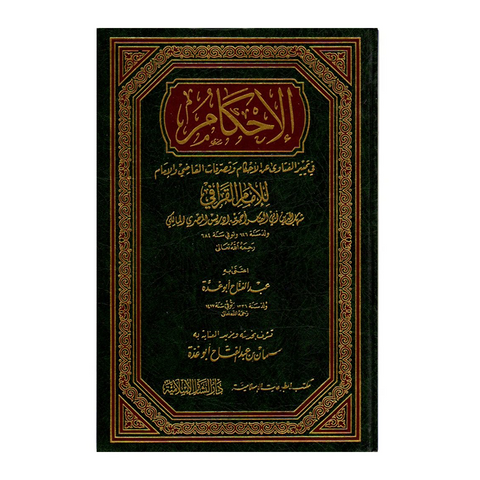
الاحكام في تمييز الفتاوى عن الأحكام وتصرفات القاضي والإمام
ABOUT THE BOOK
is an essential work for students and scholars of Islamic law, focusing on the crucial distinctions between fatāwā (legal opinions) and aḥkām (binding judicial rulings). This comprehensive text examines how legal verdicts differ in authority, purpose, and application, and explores the practical conduct and responsibilities of the qāḍī (judge) and the imām (leader) in implementing Islamic rulings.
Drawing on classical jurisprudence and real-world legal scenarios, the author guides readers through key methodological issues that arise in legal practice. The book highlights the conditions under which a fatwā becomes enforceable as a court judgment, clarifies the roles and limits of juristic discretion, and outlines how judges and imams should administer justice with integrity, precision, and adherence to sharʿī principles.
With clear explanation and scholarly rigor, this work helps bridge the gap between theoretical fiqh and practical application, making it a valuable reference for jurists, students of law, judges, and anyone seeking a deeper understanding of Islamic legal processes and judicial conduct.
